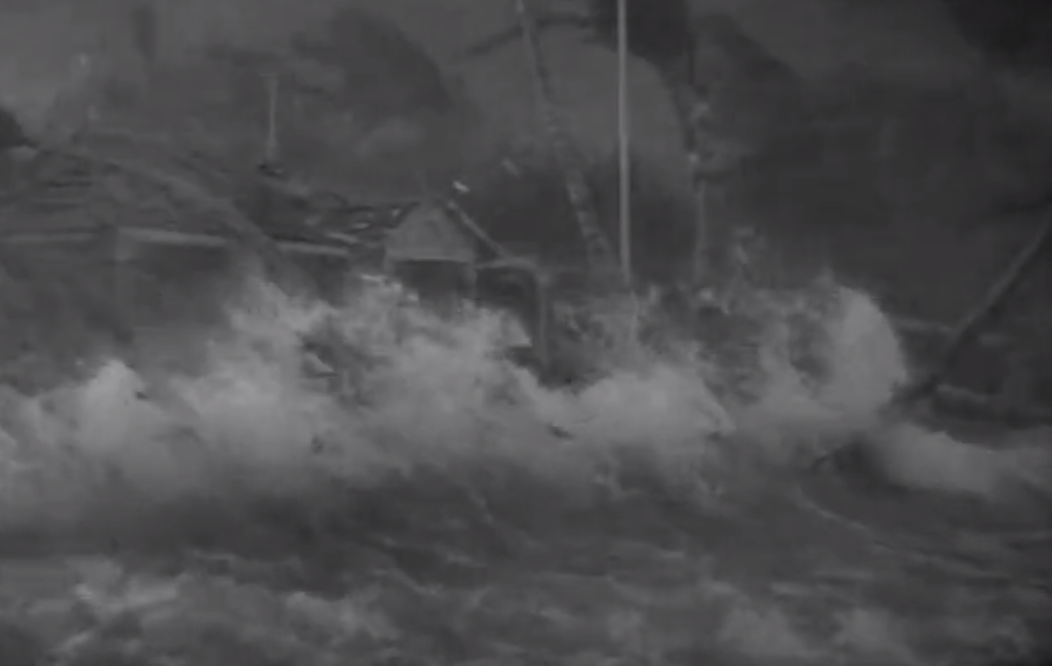
Cover: Detail from England's Great Loss (1703), engraving, The Storm (Penguin Classics)
Paperback, 2005
"
The Storm (1704) is a pioneering work of journalism and science reporting by British author Daniel Defoe. It has been called the first substantial work of modern journalism, the first detailed account of a hurricane in Britain
..
It relates the events of a week-long storm that hit London starting on
24 November and reaching its height on the night of 26/27 November 1703."
Wikipedia
"For Defoe, bankrupt and just released from prison for seditious
writings, the storm struck during one of his bleakest moments."
The Storm (Penguin Classics)
Paperback, 2005, by Daniel Defoe (author), Richard Hamblyn (author)
"Defoe always liked to introduce the sound of multiple voices on the page, just as he liked to introduce the complexity of multiple points of view, and one of the technical distinctions of The Storm is the way in which these effects are used to suggest the crowded simultaneity of the events it describes. As Paula R. Backsheider has pointed out, 'The Storm has sections that show simultaneous events vertically and horizontally; in one moment we may know events in a single house, in adjacent houses, in several parts of town, and in neighboring towns. The book locates events so closely together that the sequence seems to be a single event, each discrete part so integral to the whole that it is indistinguishable from the whole except in memory.'*
...the action of The Storm is concentrated...into a single night of destruction and its aftermath. This is what gives the book such a powerful sense of immediacy and crisis, and, as the picture of a shared catastrophe unfolds before us, Defoe has us listen not only to the sounds of the high wind rising but also to the voices of the eyewitnesses, who clamour for a chance to add their stories and words to the account."
The Storm (Penguin Classics)
Paperback, 2005, by Daniel Defoe (author), Richard Hamblyn (author)
*Paula R. Backscheider, Daniel Defoe: Ambition & Innovation (Lexington, Kentucky: University Press of Kentucky, 1986), pp. 86-87